From Practice Owner to Distributor: Why I Believe Myopia Management Is Changing Children’s Eyewear
By Ryan Ho, Optometrist & Founder, Asia Contacts 1
My perspective after more than 20 years in independent optometry — and what I am now seeing across Australia, Asia and the global optical industry
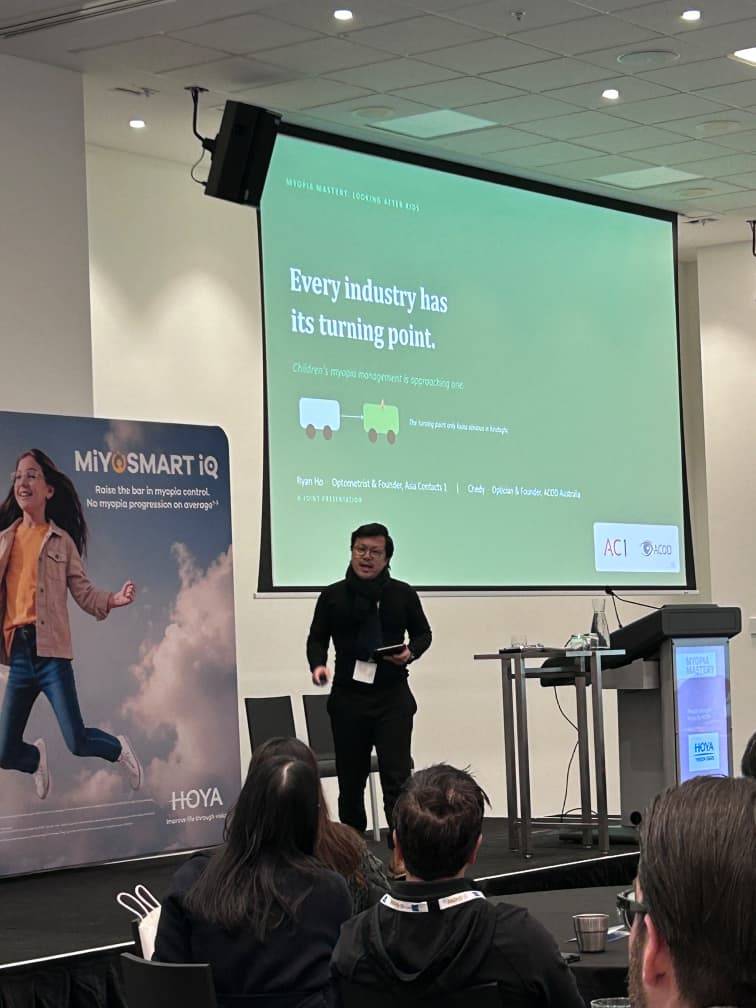
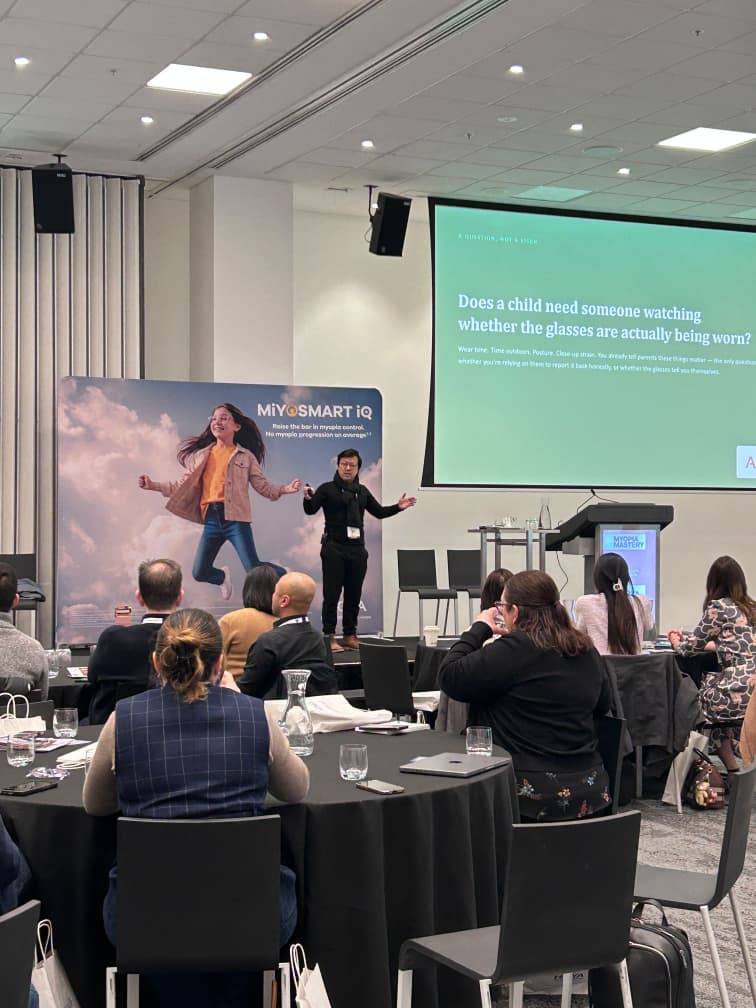
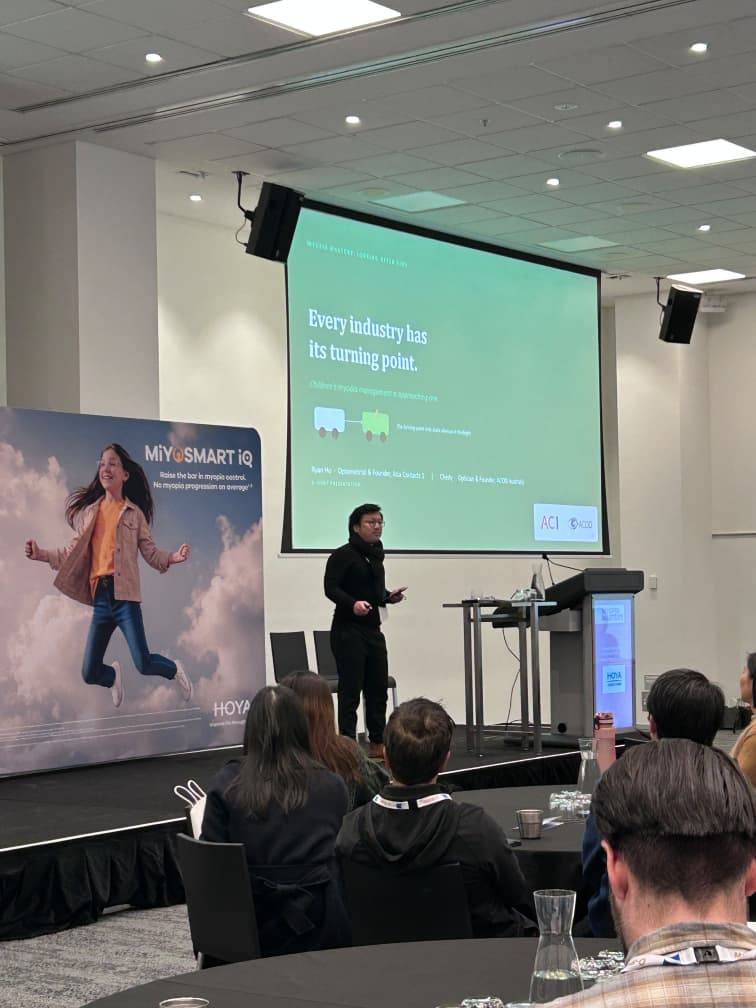
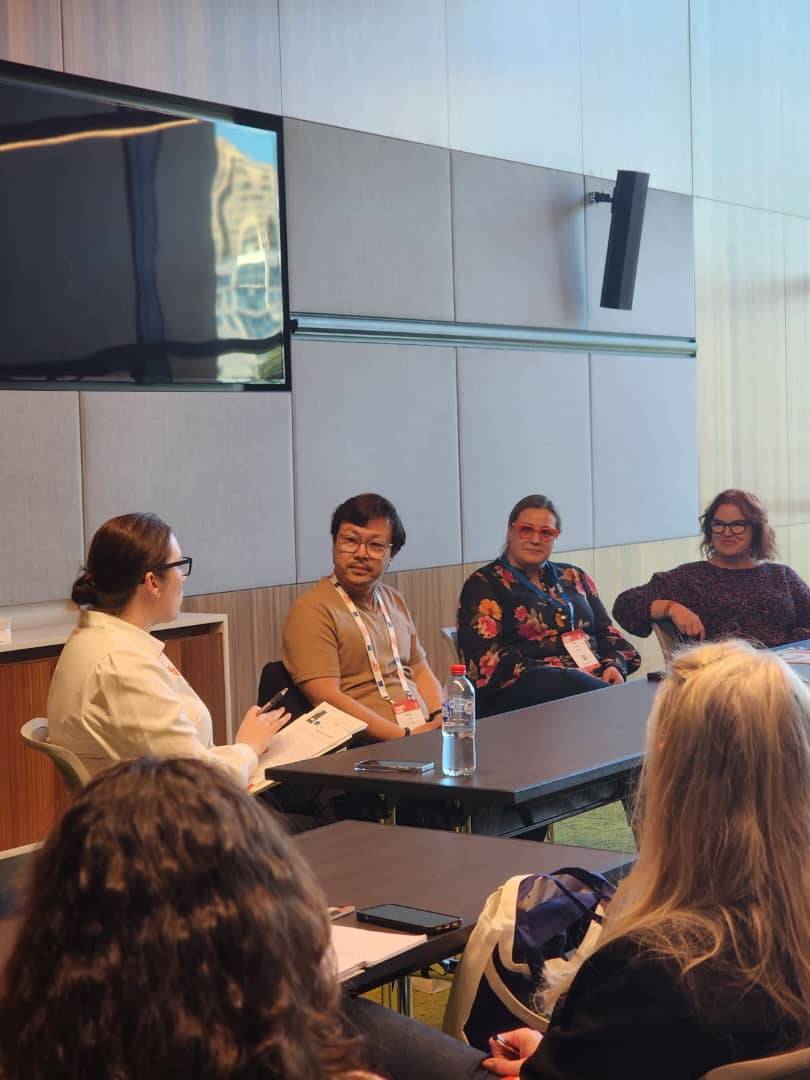
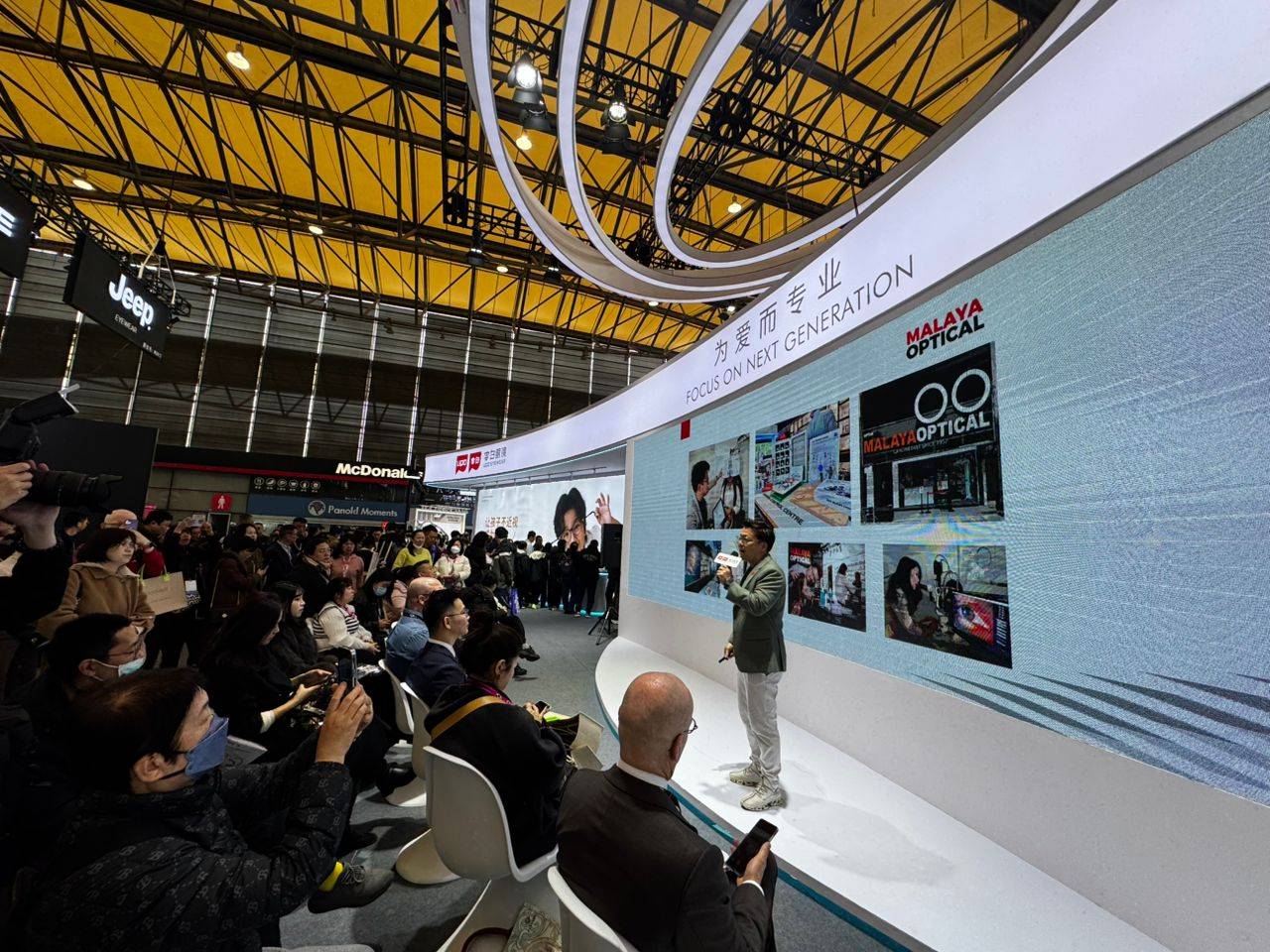
Recently, I had the privilege of being invited to speak to Australian ECPs about a subject I am particularly passionate about: the future of children’s eyewear and myopia management.
For me, this wasn't simply a distributor presenting another product.
It was a subject that brought together two very different parts of my professional life.
For more than 20 years, I worked within my own independent optometry practice, Malaya Optical in Malaysia, dealing directly with patients, parents and the everyday realities of running an optical practice.
Today, through Asia Contacts 1, my perspective has changed.
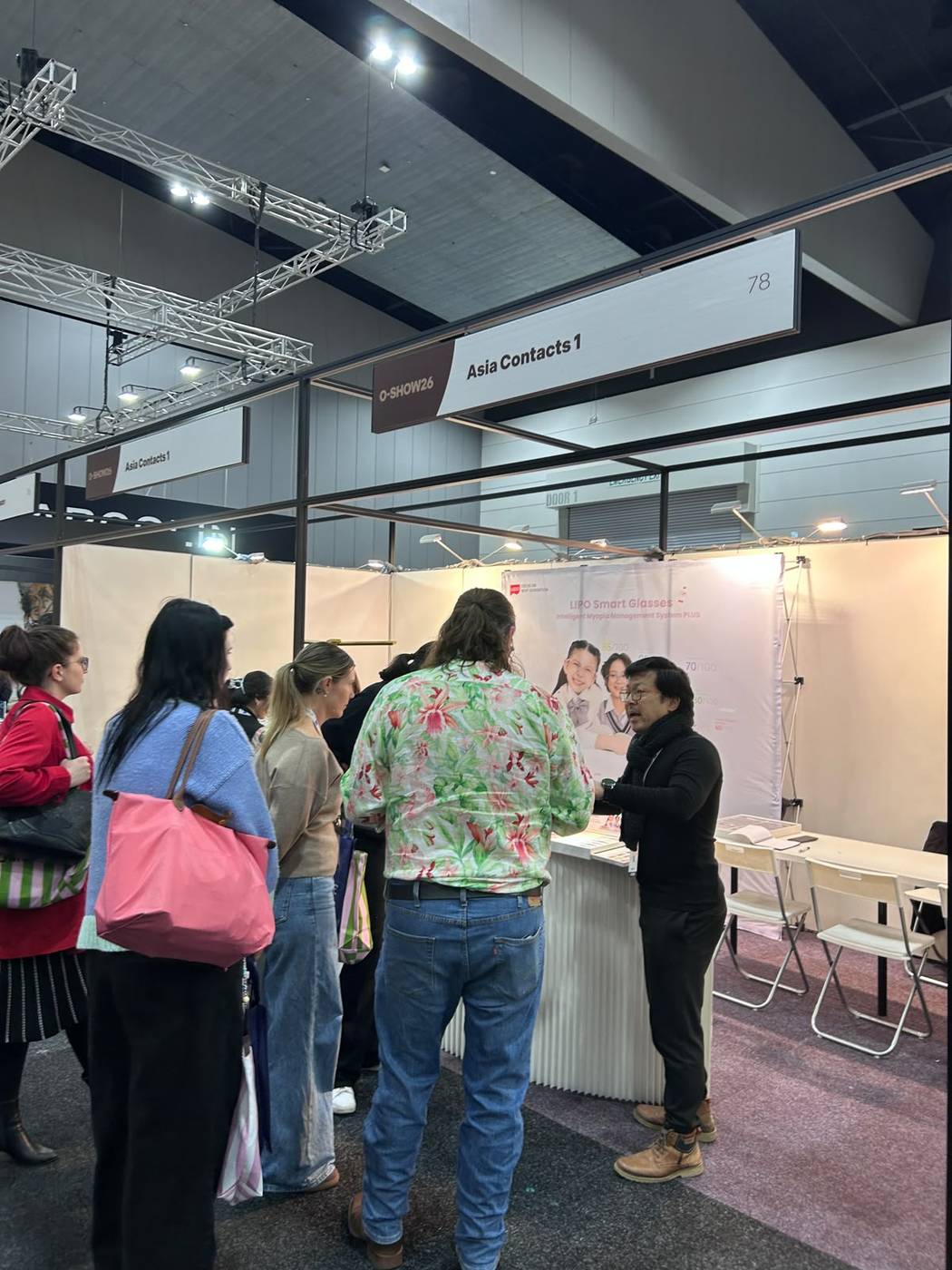
I now travel extensively throughout Australia, New Zealand and Asia, visiting independent practices, meeting manufacturers, attending major international optical exhibitions and watching new technologies develop before they reach our market.
I am no longer looking at what is happening from just one practice.
I am beginning to see the pattern.
And I believe children's myopia management is approaching an important turning point.
Every industry has its turning point
During my presentation, I used the automotive industry as an example.
We still have excellent petrol cars.
But electric vehicles changed the direction of the entire automotive industry.
I believe something similar is happening in children's myopia management.
By 2050, approximately half of the world's population is projected to be myopic. And this is not simply a future problem. Increasing numbers of myopic children are already sitting in ECP chairs today.
For independent optometrists, this represents more than simply another lens category.
It is changing the way we think about paediatric eye care, spectacle lenses, frame selection, follow-up and the relationship we build with families.
And from what I am seeing internationally, the frame itself is becoming increasingly important.
I've watched children's eyewear develop in three waves
Having spent many years both as an optometrist and now as a distributor, I tend to think of the evolution of children's eyewear in three waves.
Wave 1 — It was about how the frame looked
For many years, good children's eyewear largely meant good-looking children's eyewear.
Bright colours.
Fun shapes.
Character branding.
Frames designed to make children feel comfortable wearing glasses.
There was nothing wrong with that. It was an important stage in the development of children's eyewear.
But the frame was mainly considered a fashion product.
Very few people were asking:
What is this frame actually doing for the child's visual treatment?
Wave 2 — Fit became part of the treatment
Then myopia-control spectacle lenses started changing the conversation.
Lens manufacturers began introducing increasingly sophisticated lens designs, and suddenly frame selection mattered differently.
Dimensions mattered.
Centration mattered.
Stability mattered.
How the frame sat on the child's nose mattered.
For example, some myopia-management lens designs require specific frame dimensions and fitting parameters.
A frame could be beautiful, comfortable and fashionable — but still not necessarily be the correct frame for the lens being prescribed.
Frame selection stopped being purely about style.
It became functional.
As an optometrist, I understand why this matters clinically.
As a distributor, I can now see how much opportunity there is for independent practices to become much more knowledgeable and selective about the children's eyewear they dispense.
Wave 3 — The eyewear starts giving us information
This is where I believe the market is moving next.
During my travels over the last few years, particularly through the major optical exhibitions and manufacturers in Asia, I have watched another category begin to emerge.
Smart children's eyewear.
Not simply a frame.
Not simply something designed to hold a myopia-control lens.
But eyewear capable of providing information about what the child is actually doing after leaving the practice.
This includes measurements relating to:
- daily spectacle wear time
- near-work behaviour
- posture
- ambient light
- time spent outdoors
These are already conversations we have with parents.
We tell families:
“Make sure the glasses are being worn.”
“Spend more time outdoors.”
“Be conscious of prolonged near work.”
“Watch working distance and posture.”
But historically, once that child walks out of the practice, much of that information becomes difficult to objectively understand.
At the next appointment, we ask the parents.
We ask the child.
And we rely heavily on what they remember.
What happens when the eyewear can start giving us additional information?
That is what I find particularly exciting.
I am seeing this shift internationally
One of the advantages I have today as a distributor is that I travel extensively.
I attend optical exhibitions internationally.
I spend time with manufacturers.
I visit optical practices in different markets.
I travel between Australia, New Zealand, Malaysia, China and other parts of Asia.
And increasingly, when I attend major exhibitions in Asia, the conversation around myopia is everywhere.
Orthokeratology.
Myopia-control spectacle lenses.
Atropine.
Other emerging myopia-management technologies.
And increasingly:
smart eyewear and behavioural monitoring.
As I said during my Australian presentation:
This isn't simply “coming soon.”
It has started.
Australia may not always be the first market where these technologies appear.
But travelling internationally gives us at Asia Contacts 1 an opportunity to see what may be coming before it becomes mainstream here.
That is one of the roles I want AC1 to play for our ECP partners.
Not simply supplying frames.
Helping independent practices see where the market is going.
Introducing LIPO ASTER 2.0 to Australia
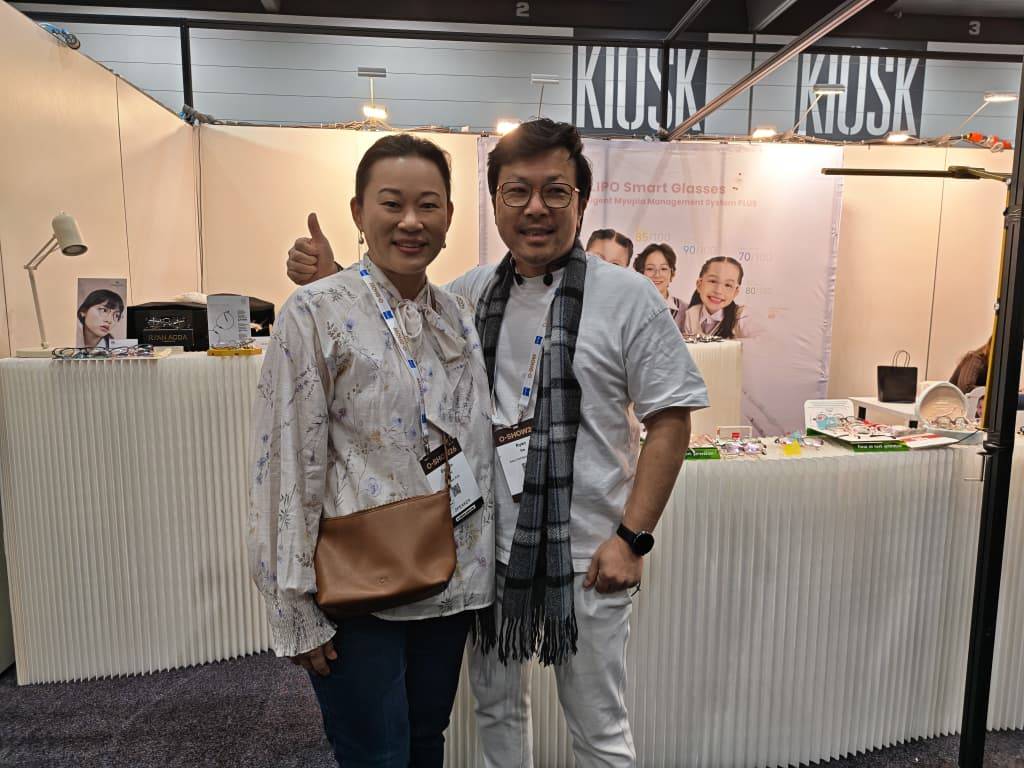
One technology I shared during my presentation was LIPO ASTER 2.0.
This generation of LIPO smart eyewear monitors five behavioural and environmental signals:
Daily wear time
Ambient light
Posture
Near-work behaviour
Time outdoors
The information is gathered automatically rather than relying entirely on the child or parent to remember and report it.
What also interests me about ASTER 2.0 is the direction LIPO has taken with the hardware.
The smart temple technology can integrate with selected LIPO frame series, including BAI, XIAO, DU and BEN, rather than requiring the ECP to treat it as a completely separate eyewear range.
For me, this is important.
Technology needs to fit into the way an optical practice actually works.
Technology does not replace good dispensing
There is another message I was very deliberate about sharing during my presentation.
Before we get excited about data, sensors or smart eyewear, something much more fundamental still has to be right:
The frame has to fit properly.
If the eyewear isn't fitted correctly in the first place, sophisticated technology cannot solve the fundamental problem.
The frame needs to be selected properly.
It needs to remain stable.
The lens needs to sit where it is intended to sit.
And somebody who understands children's dispensing needs to make those decisions.
Technology does not make professional dispensing less important.
I believe it makes professional dispensing even more important.
And this is an area where independent ECPs can differentiate themselves.
I don't believe frames and myopia-control lenses should be considered separately
During a recent trip to Shenzhen, China, I also had the opportunity to see a collaboration involving LIPO and HOYA MiYOSMART 3.0.
The concept being presented was:
Control + Stability
The lens provides the optical Control.
The frame helps provide the Stability through consistent fitting and positioning.
The interesting part for me wasn't simply the collaboration itself.
It was the philosophy behind it.
Rather than looking at a myopia-management lens and a children's frame as two completely separate products, the industry is beginning to think about them as parts of a complete system.
I believe we will see much more thinking like this in the years ahead.
Why this matters to Asia Contacts 1
Asia Contacts 1 is an Australian and New Zealand eyewear distributor.
But I don't want AC1 to become another company simply asking an optometrist:
“Would you like to buy some frames?”
There are plenty of frame companies.
Our ambition is different.
My background comes from independent optometry.
I understand what it is like to run a practice.
I understand the importance of selecting products that have a reason to exist in your dispensary.
And through my work as a distributor and my international travel, I now have the opportunity to identify brands, ideas and technologies that I believe can add something meaningful to independent practices in Australia and New Zealand.
Myopia-management eyewear is one of those areas where I believe Asia Contacts 1 can genuinely specialise.
If you're serious about myopia management, think beyond the lens
Many Australian independent practices are already investing heavily in myopia management.
You may already prescribe specialised spectacle lenses.
You may offer Ortho-K.
You may manage children using contact lenses, pharmaceutical options or combinations of different strategies.
But there is another question worth asking:
Is your children's eyewear range evolving at the same speed as your clinical myopia-management offering?
If you are investing in sophisticated lens technology, the frame holding that lens should not simply be an afterthought.
It should fit properly.
It should be adjustable.
It should be comfortable enough that the child actually wears it.
It should support stable lens positioning.
And increasingly, it may even help provide additional information about what happens between appointments.
That is the area of the industry that Asia Contacts 1 wants to help develop with Australian and New Zealand ECPs.
The future isn't only about what children see through their glasses
After more than two decades working in independent optometry, I have watched our profession change considerably.
Now, as a distributor travelling internationally and speaking with ECPs across different markets, I have the privilege of viewing the industry from another angle.
And I believe we are at the beginning of another significant change.
Children's eyewear started with style.
Then came fit and function.
Now we are beginning to see data and intelligent eyewear enter the conversation.
Exactly where that takes our profession remains to be seen.
But that is also what makes this such an exciting time to be involved.
As I said when closing my presentation:
Every industry has its turning point.
Don't just follow the future. Help shape it.
About Ryan Ho
Ryan Ho is an optometrist, independent optical practice owner and Managing Director of Asia Contacts 1, an eyewear distributor serving independent ECPs throughout Australia and New Zealand.
Ryan's background includes more than 20 years in independent optometry through his family's practice, Malaya Optical in Malaysia. Today, his work with Asia Contacts 1 takes him throughout Australia, New Zealand and Asia, working with independent ECPs, eyewear manufacturers and emerging optical technologies.
Serious about children's eyewear and myopia management?
If your practice is developing its myopia-management offering and you are looking for children's eyewear designed specifically around fit, stability and the changing needs of myopic children, speak with the Asia Contacts 1 team about LIPO.
Asia Contacts 1 — Focus on the Next Generation.