
Child myopia management: understanding your options.
If your child is becoming short-sighted, there are now several ways an eye-care professional can help manage how far it progresses. This page explains them in plain words, to read again at home. We supply children's frames to optical practices: nothing here is for sale to parents, and every step ends back with your optometrist.

- Children’s frames
- 28
- Lens widths
- 38–53 mm
- Independent practices
- 226
What is childhood myopia?
Myopia is the medical name for short-sightedness. A child with myopia sees clearly up close but not in the distance — the whiteboard, a road sign, a face across the park. It happens because the eye has grown slightly too long from front to back, so light from distant objects focuses just in front of the retina instead of on it. It usually appears during the primary and early secondary school years, and it tends to increase while a child is still growing.
That is why eye-care professionals now talk about managing myopia rather than simply correcting it. Glasses or contact lenses make a child see clearly today; myopia management is the separate question of how far the short-sightedness progresses over the years ahead. Management aims to slow how far it progresses, not to reverse it.
Children rarely say they cannot see.
They have nothing to compare it with, so they do not experience it as a problem to report. What they do instead is move closer.
Sitting closer and closer to the television, or shuffling forward on the floor without noticing
Holding a book, a tablet or a phone right up against their face
Asking to move to the front of the classroom, or copying from a neighbour's book
Screwing up their eyes at store signs, street signs and scoreboards
Losing interest in things that happen at the far end of a field or a pool
Headaches or tired, rubbed eyes at the end of a school day
Short-sightedness happens because the eye has grown slightly too long from front to back, so distant light focuses just in front of the retina instead of on it. In a child the eye is still growing, which is why a prescription that was right in March can be wrong by September — and why practitioners now watch the rate of change, not just the number.
Myopia is about how the eye grows, not only about blurry vision.
Glasses fix today. The reason practitioners now watch the rate of change is that short-sightedness is the outward sign of an eye that is growing longer than it should — and eye length is what carries risk into adulthood. Each statement here is sourced to published research; the numbers are on the list of references at the foot of the page.
Short-sightedness is becoming markedly more common worldwide. On current trends, about half the world's population is projected to be short-sighted by 2050, with a smaller share reaching the high prescriptions that carry the most risk.See reference 1
Myopia is not only a focusing problem. It happens because the eye grows longer than it should, and the longer the eye, the higher the lifetime likelihood of several sight-threatening conditions — including retinal detachment, myopic maculopathy, glaucoma and earlier cataract.See reference 2
That risk is a slope rather than a threshold: it rises with each additional dioptre and each additional millimetre of eye length, which is why practitioners pay attention to how fast a child's prescription is moving and not only to where it has reached.See reference 3
Australian data follow the same pattern. Population studies of Sydney schoolchildren found short-sightedness becoming more common as children moved through school, and identified less time outdoors and more close work among the factors associated with developing it.See reference 4
Time outdoors is the one thing families can change without a prescription. Children who spend more time outdoors are consistently found to develop short-sightedness less often — a finding that includes randomised school-based trials as well as population studies.See reference 5
None of this means a short-sighted child is destined for any of it. These are population-level risks measured across very large groups, most short-sighted people never develop any of these conditions, and a prescription that stays modest carries far less of the risk than a high one. What it does mean is that the appointment is worth keeping, that the rate of change is worth measuring, and that the question of whether anything should be done about it is a clinical one — answered by a practitioner who has examined your child, not by a website.
Myopia control is not one product.
Depending on your child, a practitioner may talk about myopia-control spectacle lenses, daily disposable contact lenses made for the same purpose, lenses worn overnight, or eye drops. Every one of those is prescribed, fitted and reviewed by a registered practitioner.
What your optometrist may discuss, and what each one involves.
Australian and New Zealand optometrists have several ways to manage a child's short-sightedness, and a parent meeting them for the first time usually hears four or five names in ten minutes. Here is what each one is, in plain words, so the appointment is a conversation rather than a briefing.
The order above is not a ranking. Which option suits your child depends on their age, how fast their prescription has been moving, the measurements taken at the appointment and what they will realistically wear — a decision for the practitioner who examined them.
How anyone decides which option fits your child.
A myopia assessment is longer than a standard eye test, and most of the extra time goes on measuring rather than on choosing. Practices differ, but it generally covers:
What has been happening
How long it has been noticeable, how fast the prescription has moved, and whether either parent is short-sighted.
Vision and prescription
The familiar part — what your child can see, and the prescription that corrects it. In children this is often measured with drops that relax the focusing muscle, so the number is the eye's and not the effort's.
The length of the eye
Called AXIAL LENGTH. Short-sightedness in children is mostly the eye growing too long, so many practices now measure that length directly and track it between visits. It is quick, it does not touch the eye, and it is the number that tells a practitioner whether things are changing faster than expected.
The health of the eye
The front surface, the focusing and the way the two eyes work together — which also decides whether an option like Ortho-K is suitable.
A plan, and a date to check it
Which option, why that one for your child, and when you come back. The review is not a formality: it is how anyone finds out whether the plan is working.
What it costs and whether a health fund contributes is answered further down this page. If you would rather walk in with the questions already written down, there is a guide you can print. And if you do not have a practice yet, find one near you.
We supply the frame. Your practice prescribes the lens.
The frame
AsiaContacts1 supplies this
You can choose one here and take the name to your appointment. Your practice orders it, fits it to your child's face and glazes it with the lenses they have prescribed.
The lens
Your practice prescribes and dispenses this
Made to a measurement taken from your child's eyes, and reviewed as the prescription changes. That is regulated work, done by a registered practitioner.
The lens is only part of the solution.
Choosing the lens is your practitioner's decision. What holds it where it was measured to sit, on a face that is still growing, is the frame — the part we know something about.
Fit
A child's nose bridge is lower and flatter than an adult's, so a scaled-down adult frame has nothing to sit on.
The frame slides down the nose and your child looks over the top of it, outside the lenses.
Lens position
Every lens has a centre that has to sit in front of the pupil. The frame holds it there, which is why the dispenser measures your child's eyes against the frame you chose.
The frame moves, so the lens no longer sits where it was measured. That is why the practice asks you to bring the glasses back for adjustment.
Adjustability
Children grow unevenly, so the temples and nose pads need to be re-set again and again without breaking.
You need a new frame months before the prescription does.
Comfort
Weight, width and where the arms sit behind the ear. Children rarely say glasses are uncomfortable — they just stop wearing them.
The glasses come off, and nobody finds out until the next appointment.
Durability
Hinges and screws that survive a school bag, with parts a practice can actually replace.
The glasses spend weeks waiting on a part, and your child goes without them.
A frame does not treat anything — it holds a prescribed lens where it was prescribed to sit. We distribute children’s frames, so read this as what we know rather than as neutral advice, and ask the practice dispensing the glasses to talk you through the fit. Find a practice that stocks our frames.
Frames built for a face that is still growing.
A children's frame is not a small adult frame. The bridge sits differently on a nose that has not finished forming, the temples have to hold through a school day, and the whole thing has to be light enough that a nine-year-old forgets it is there.
- LIPO · TONG (Baby)TONG 05238mm lens width6 colours
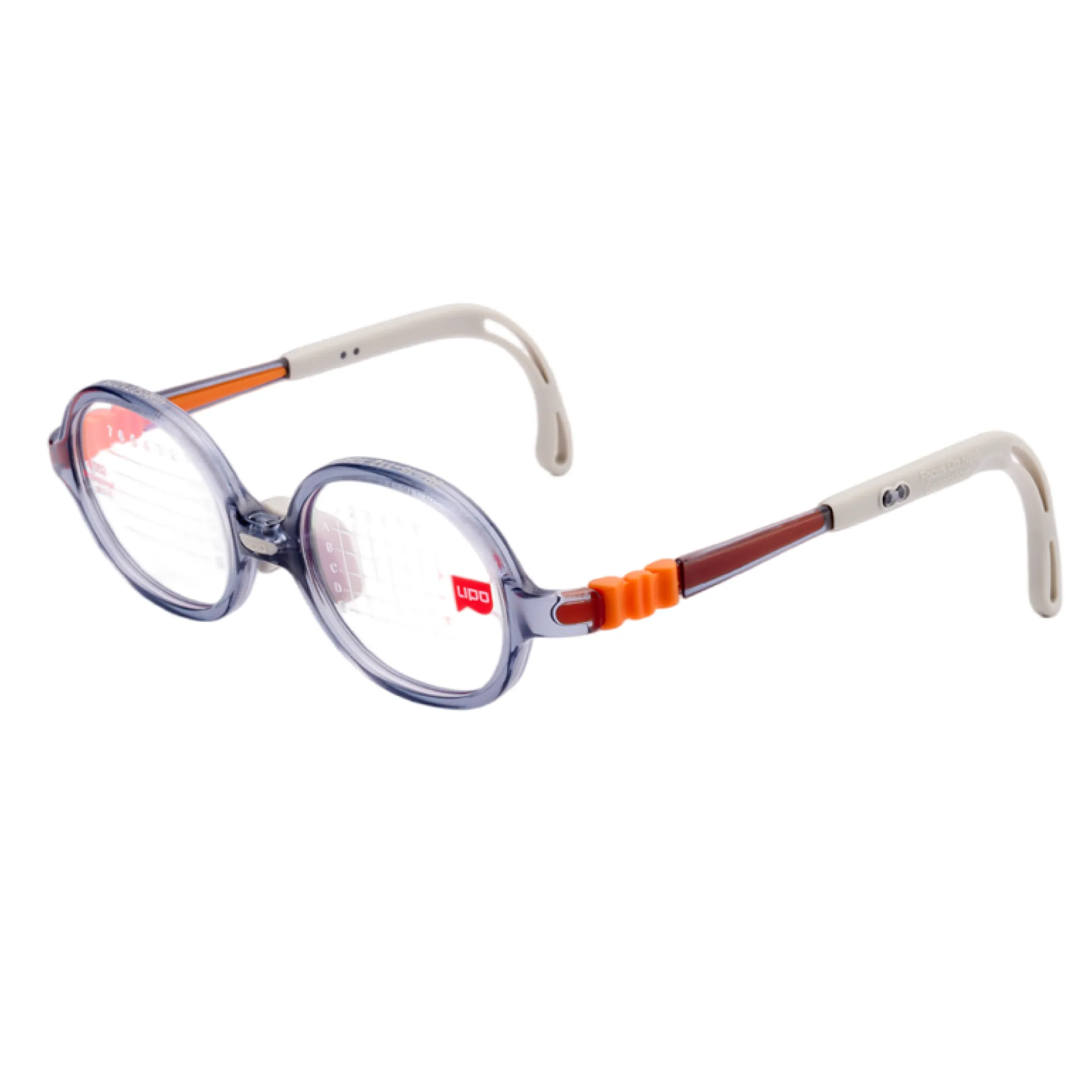
- LIPO · TONG (Baby)TONG 07341mm lens width5 colours
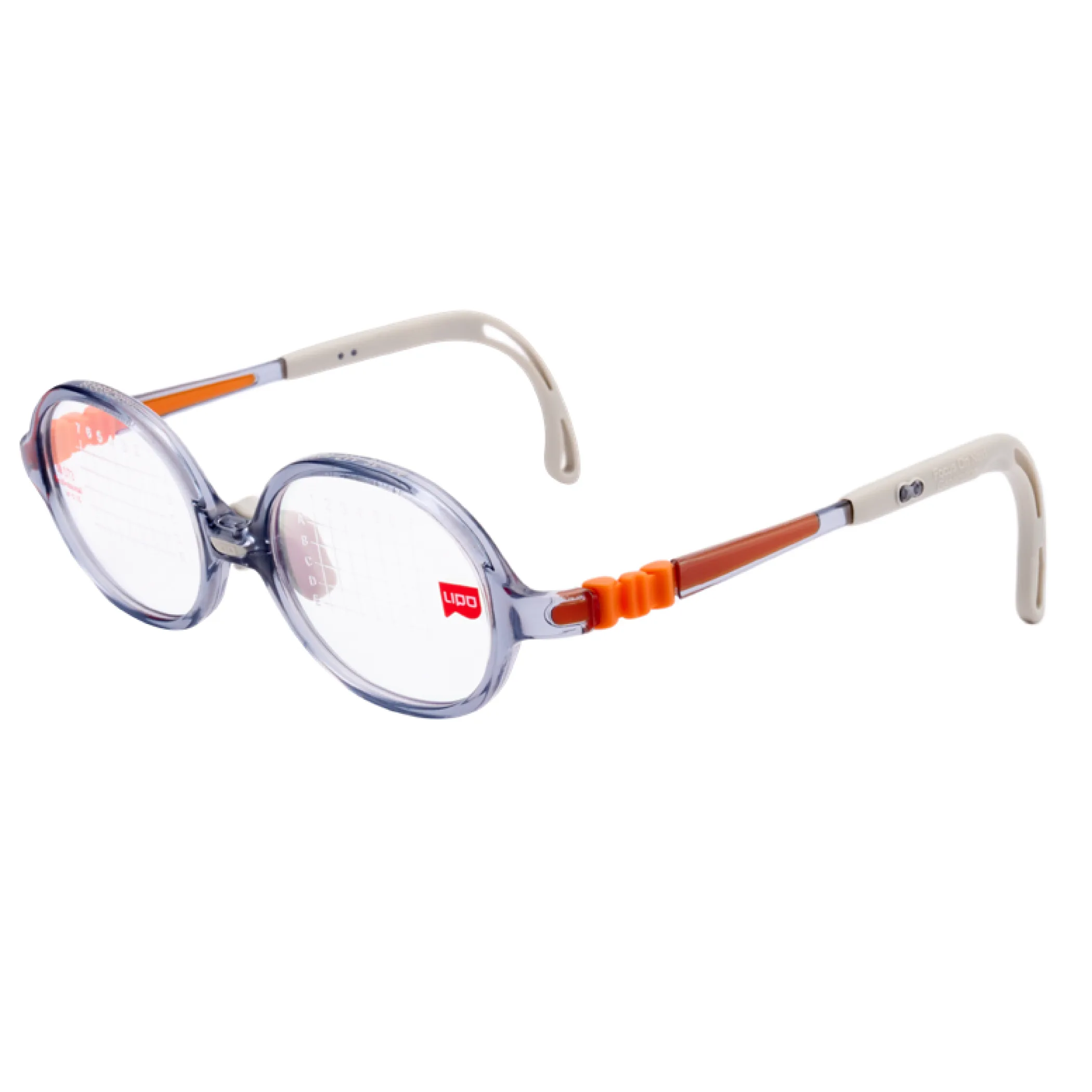
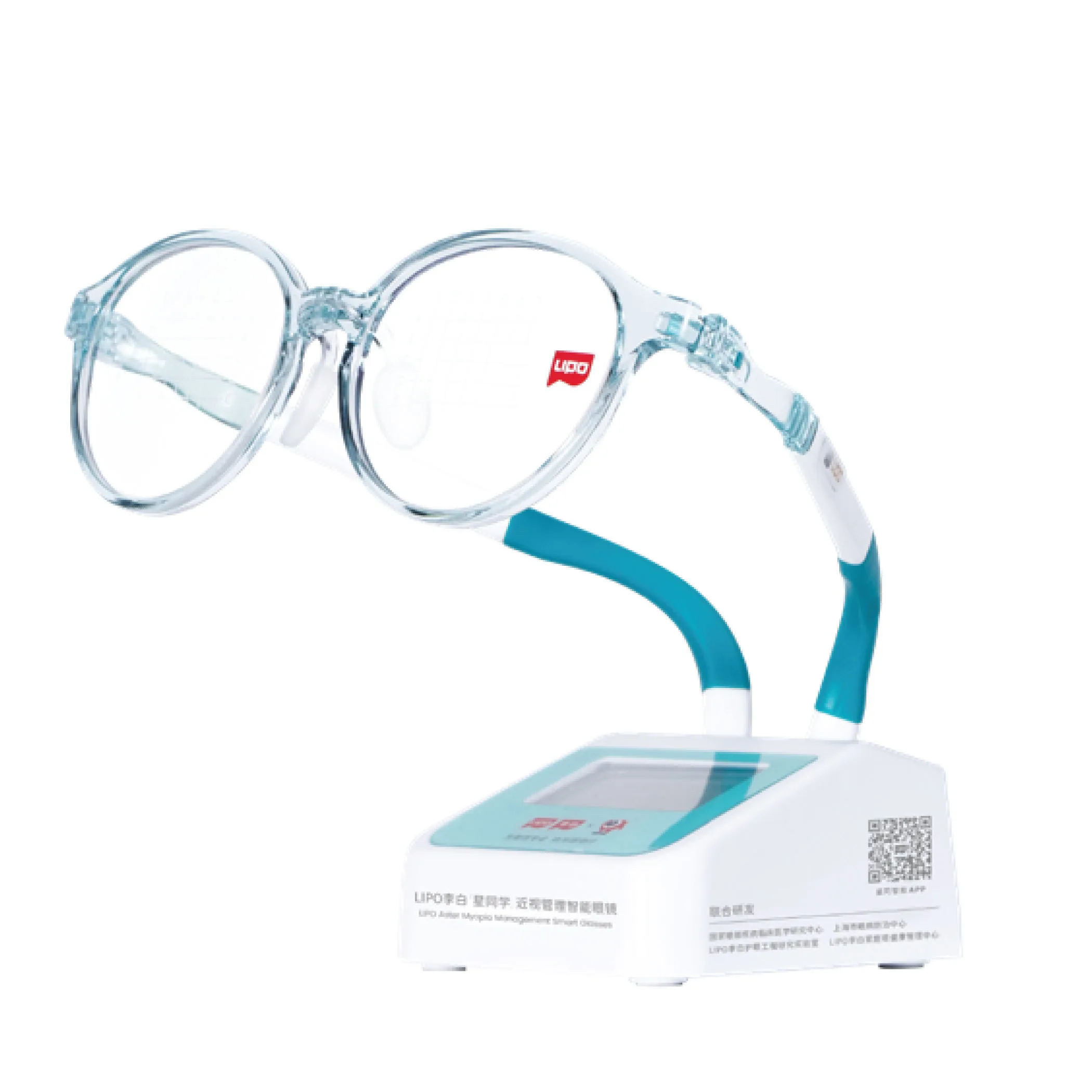
- LIPO · ASTER (AI Smart)ASTER 901SS44mm lens width4 colours
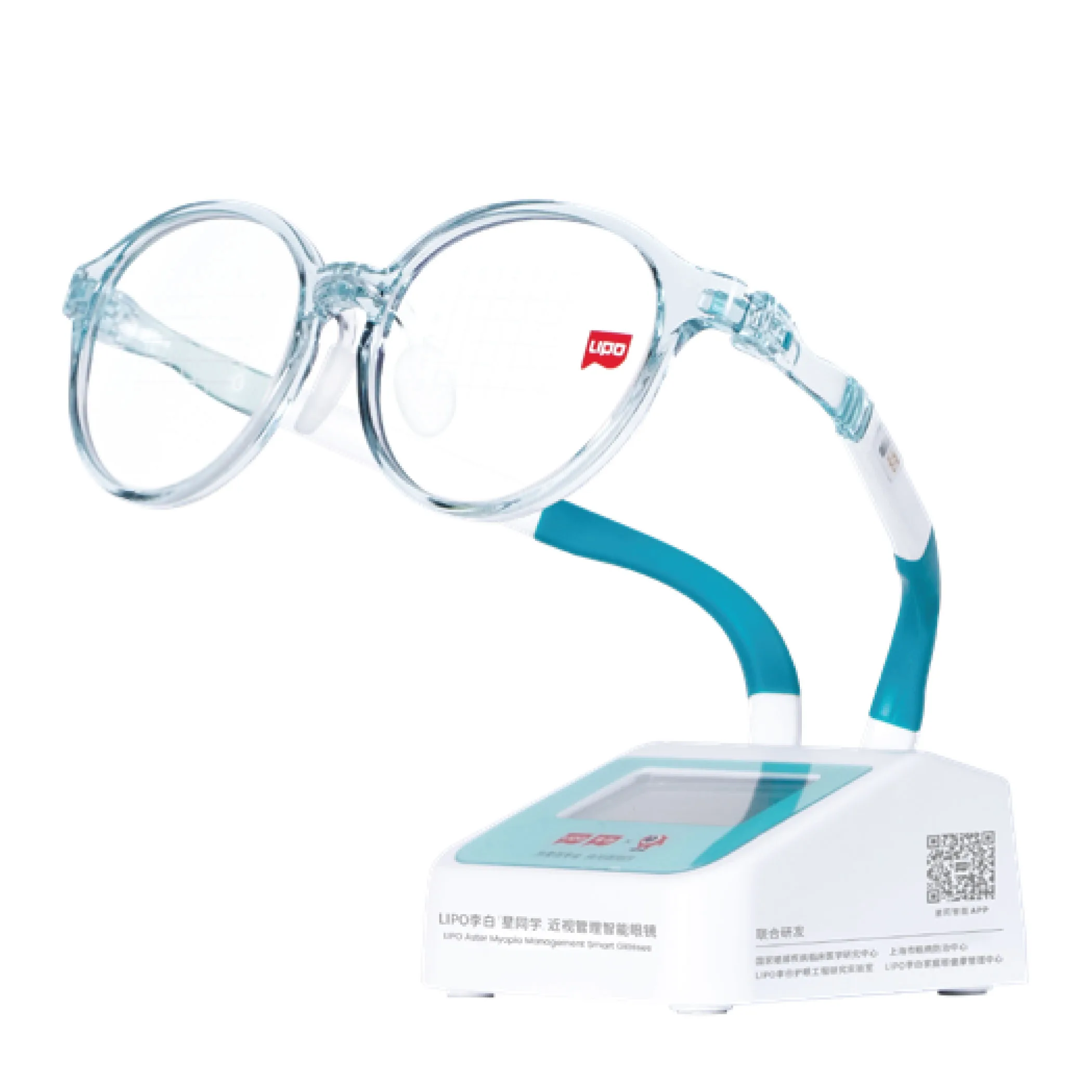
- LIPO · ASTER (AI Smart)ASTER 901SM44mm lens width4 colours
- LIPO · XIA (Teens)XIA 20645mm lens width5 colours
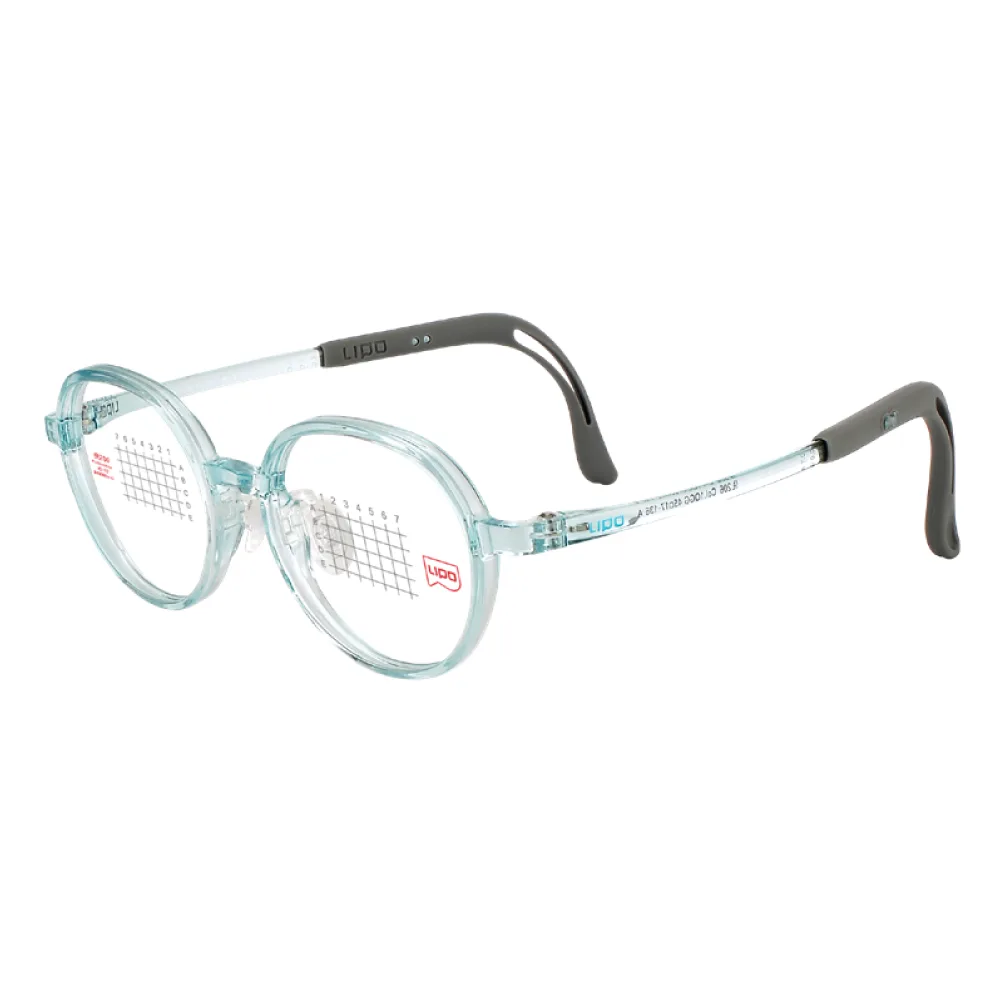
- LIPO · XIA (Teens)XIA 20746mm lens width5 colours
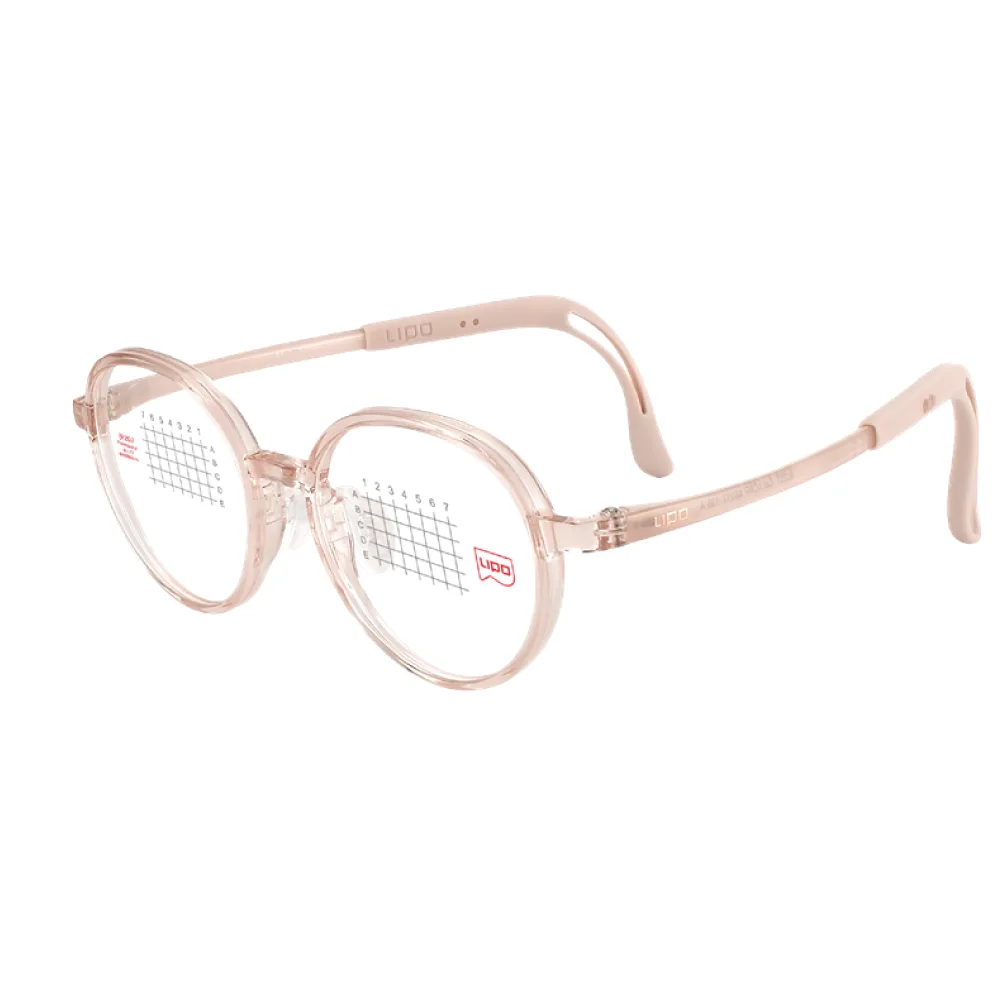
Note the ones your child likes and take the names with you. The final choice belongs at the counter, because the fit is measured on your child’s face — but choosing at home, with no queue behind you, is easier on everyone.
LIPO: children's frames built in stages.
LIPO makes children’s and teens eyewear in stages rather than styles: TONG for the smallest faces, XIA for teens, and ASTER, whose temples are built to carry electronics. As a child grows, the practice moves them to the next size in the same range instead of starting over.
Eyewear with sensors is a monitoring technology, not a treatment: nothing on this page claims that any frame slows how quickly a child’s short-sightedness progresses.
More about LIPO, or find a practice near you that stocks it.
What practices say about the myopia-control eyewear.
Optical practices in Australia and New Zealand that stock our eyewear, in comments published on this site. These are their own opinions of the product — not a measure of how well myopia control works for any one child. That question belongs with the practitioner who examined your child.
“Our patients love the comfort and effectiveness of the LIPO eyewear for myopia control. Highly recommended!”
Eye TrendBox Hill, Melbourne
“Asia Contacts 1's LIPO eyewear offers excellent myopia control. Our patients appreciate the quality and comfort.”
Crystal VisionCannington, Perth
“The myopia control solutions from Asia Contacts 1 are remarkable. Our patients love the clarity and comfort of the eyewear.”
Eyecare KidsHillsdale, Sydney
“LIPO eyewear has been great for our patients. The myopia control options are excellent, and the service is top-notch!”
Eye LabBankstown, Sydney
“Myopia control eyewear from Asia Contacts 1 is effective and comfortable. Positive feedback from our patients.”
Myopia ClinicAuckland, NZ
“LIPO eyewear is well-received by our patients. The myopia control features are impressive. Great partnership with Asia Contacts 1!”
Aplus OpticalMount Waverley, Melbourne
What to ask before you commit to anything.
AsiaContacts1 does not process claims and cannot tell you what your policy covers — but these are the four questions that get you a straight answer from the two people who can.
“What item numbers will this be billed under?”
Ask the practice before you commit. Funds treat lenses inconsistently, and the item number is what your fund needs in order to give you a straight answer.
“Can you claim it on the spot?”
Most Australian practices can process an optical extras claim at the counter, so you pay only the gap. Worth confirming before the appointment rather than at it.
“How much of my optical limit does this use?”
Extras cover usually resets annually and children's prescriptions change. If a replacement pair is likely mid-year, it is better to know that before the first one is ordered.
“Is the frame covered separately from the lenses?”
They are often two different entries on a policy. AsiaContacts1 supplies the frame and your practice supplies the lenses, so the two costs are separate on the invoice as well.
New Zealand has no equivalent of Australian health-fund extras cover. Some employer schemes and private policies include an optical allowance, so it is worth checking yours — and AsiaContacts1 supplies practices in both countries, so the frames on this page are available either side of the Tasman.
Ten questions to take into the appointment.
It is easy to forget what you meant to ask once you are in the room. Print these, or keep this page open on your phone at the appointment.
What did you measure today, and how much has it changed since last time?
The number and the rate of change are the two facts every later decision rests on. Ask for both, and write them down.
What are the options for my child, and which one are you recommending?
There is more than one approach. Ask them to say why this one, for this child, rather than the others.
How will we know whether it is working, and when do we check?
Get the measurement and the interval in your own notes so the next appointment has something to compare against.
How many hours a day does my child need to wear these?
It affects whether the frame you choose is comfortable enough to survive a whole school day.
What does this cost over a year, including follow-up visits?
The sticker price of one pair is not the number you need to plan around. Ask for the annual figure.
What can I claim, and under which item numbers?
Take the item numbers home and ring your fund with them. Practices cannot tell you what your policy covers, only what they will bill.
What should I look for in a frame for my child?
Ask about bridge fit, temple length and weight. Then choose a frame your child will actually wear.
What happens if they get broken, or if the prescription changes mid-year?
Repairs, replacement parts and re-glazing are handled by the practice that dispensed them. Find out how before you need to.
Is there anything else we should be doing at home?
Ask what the evidence supports for your child specifically, rather than what you read online.
When do we come back?
Put the date in your phone before you leave the room.
Prints just these questions, with space to write the answers. To keep a PDF, pick “Save as PDF” in the print window.
AsiaContacts1 will co-brand this guide with your practice name and hand it back to you for your dispensary. It carries no pricing, no product claim and no link that takes your patient anywhere except back to you. Ask your REP, or contact us.
The questions we get asked most.
Short answers, in the order parents tend to ask them.
What is myopia?
Myopia is the medical word for short-sightedness. Things close up are clear and things far away are blurry — store signs, the whiteboard, street signs, the television from the back of the room.
It happens because the eye has grown slightly too long from front to back, so light focuses just short of the retina instead of on it. In children the eye is still growing, which is why the prescription often keeps changing year to year.
What is myopia control, and how is it different from ordinary glasses?
Ordinary glasses correct the blur. Myopia control is the term for treatments a practitioner may use to manage how the eye is changing over time, alongside correcting the blur.
Your optometrist or optician decides whether any of them suits your child, based on their age, their prescription and how quickly it has been changing.
Can I buy myopia-control lenses on this website?
No. Myopia-control lenses and contact lenses are prescribed, fitted and checked over time by a registered practitioner.
AsiaContacts1 supplies frames to independent optical practices. Your practice orders the frame and fits the lenses into it.
Can I choose the frame here?
Yes — that is what this page is for. Browse the children's frames, note the ones your child likes, and take the names to your appointment. Your practice orders them in and fits them.
It is worth doing in that order. A frame that a nine-year-old actually wants to wear is worth more than one they take off in the playground, and choosing it at home with no queue behind you is easier than choosing it at a counter.
How much does it cost?
There are two separate costs and AsiaContacts1 sets neither of them. The lenses are quoted by your practice, because they include the examination, the fitting and the follow-up visits. The frame is a second, separate cost, and your practice prices it at its own counter.
Ask for the whole-year figure rather than the sticker price — how many follow-up visits are included, what happens when the prescription changes, and what a replacement costs. That number is the one you can actually plan around.
Will my health fund cover it?
In Australia, optical extras cover is common and most practices can claim on the spot. Whether a particular myopia-control lens is claimable depends on your fund, your level of cover and the item it is billed under — funds do not treat these consistently.
Ask your practice for the item numbers before you commit, then ring your fund and quote them. In New Zealand there is no equivalent extras system; some employer and private health plans include optical, so check your policy.
Is my child too young for glasses?
Frames are made in sizes down to babies and toddlers — a frame for a two-year-old is a different object from a small adult frame, with a different bridge, different temples and a fit that holds on a face that is still changing shape.
Whether your child needs glasses at all is a question for the practitioner who examined them, not for us.
How would I know if my child cannot see clearly?
Children rarely say they cannot see, because they have nothing to compare it with. What they do instead is move closer — sitting near the television, holding a book or a tablet close to their face, asking to move to the front of the class, squinting at store signs or street signs, or losing interest in things that happen at the far end of a field.
Complaining of headaches or rubbing their eyes after school is worth mentioning too. Any of it is a reason to book an eye examination, not a reason to panic.
My optometrist sent me here. Who is AsiaContacts1?
We are an eyewear distributor. We supply frames to independent optical practices and optical groups across Australia and New Zealand, and the business is run by an optometrist and an optician who own their own practice.
We do not compete with the practice that referred you.
We are in New Zealand. Does any of this apply?
Yes. AsiaContacts1 supplies practices in both Australia and New Zealand, and the stockist finder lists both. What differs between the two countries is the funding side, not the eyewear — there is no New Zealand equivalent of Australian health-fund extras cover.
What happens when my child breaks them?
They will. Take them back to the practice that dispensed them — that practice holds the record of what was fitted, and it deals with us directly on repairs, replacement parts and warranty.
Going back to your dispenser is faster than anything you can arrange yourself, and it keeps the prescription and the fitting in one place.
How often should we come back?
Your practitioner sets the recall interval and it depends on your child, so ask before you leave the appointment rather than waiting for a reminder to arrive. Put the date in your phone while you are still in the room.
What is axial length, and why did they measure it?
Axial length is how long the eye is from front to back. Short-sightedness in children is mostly the eye growing too long, so the length is the thing that is actually changing — the prescription is the consequence of it.
Measuring it directly gives your practitioner a number they can compare between visits, rather than waiting for the prescription to move. It takes seconds and nothing touches the eye.
What is Ortho-K?
Orthokeratology — a firm lens your child wears while they are asleep, which gently reshapes the front surface of the eye overnight. It comes out in the morning, and for most of the day they see without glasses or contact lenses.
It needs a careful fitting and regular follow-ups, and because the lens is worn asleep, practitioners are specific about cleaning and handling. Not every practice fits it, so it is worth asking when you book.
What are atropine eye drops, and where would we get them?
A prescription eye drop used in a very low concentration, usually one drop at bedtime. It does not correct vision — your child still wears their glasses or contact lenses to see — so it is generally discussed alongside one of the other options rather than instead of one.
In Australia the low concentrations used for children are compounded to order by a compounding pharmacy, so there is no brand on a shelf to look for. It is prescribed by a therapeutically-endorsed optometrist or an ophthalmologist, and supply is arranged through your practice.
I read about red-light therapy. Should we be doing that?
Repeated low-level red-light therapy is one of several newer approaches being studied and discussed at conferences. It is not settled practice in Australia, and its availability, regulatory status and professional guidance are all still moving.
Ask your optometrist. They will know where it currently stands and whether it is relevant to your child — which is a different question from whether it is interesting, and the one that matters.
Which option is best?
There is no answer to that question in general, and this page is not in a position to give you one. Which option suits a child depends on their age, how fast the prescription has been moving, the measurements taken at the appointment, and what they will realistically wear every day.
The practitioner who has your child's measurements in front of them is the only person who can answer it.
Does time outdoors really make a difference?
Most practitioners in Australia raise it, and it is the one thing on the list a family can act on the same afternoon. Practitioners here commonly suggest aiming for around two hours a day outside, and being realistic about how close and how long screens and books are held.
It sits alongside whatever else is decided, never instead of it — a child who needs management still needs it.
Looking for a practice to dispense paediatric eyewear for a patient?
Our practice list shows which independent practices near a family stock our children's and teens frames. It is a stockist list, not a referral: a practice is marked as fitting myopia-control lenses only where we have checked, and the patient stays with you.
If you want to go further.
Every independent practice in Australia and New Zealand that stocks our frames, filterable by state and suburb — with the ones we have confirmed fit myopia-control lenses marked as such.
The children's and teens eyewear maker whose range is built in stages — TONG for the smallest faces, XIA for teens, ASTER for temples designed to carry electronics.
The catalogue by fit band rather than by brand, if you would rather start from the size that suits your child's face and see everything that comes in it.
A wholesale eyewear distributor supplying independent practices across Australia and New Zealand. Worth two minutes if you are weighing how much to trust this page.
Who wrote this, and what it is based on.
- Written by
- AsiaContacts1, a wholesale eyewear distributor supplying independent optical practices in Australia and New Zealand. Written for parents, not for practitioners.
- Last reviewed
- September 2026
- Corrections
- If something here is out of date or wrong, we would rather know. Tell us, and name the section.
References
The numbered statements on this page cite these sources. They describe myopia as a condition — how common it is becoming, and what is known about long-term risk. None of them is cited in support of any product.
- 1.Holden BA, Fricke TR, Wilson DA, et al. Global prevalence of myopia and high myopia and temporal trends from 2000 through 2050. Ophthalmology. 2016;123(5):1036–1042.
- 2.Haarman AEG, Enthoven CA, Tideman JWL, Tedja MS, Verhoeven VJM, Klaver CCW. The complications of myopia: a review and meta-analysis. Investigative Ophthalmology & Visual Science. 2020;61(4):49.
- 3.Flitcroft DI. The complex interactions of retinal, optical and environmental factors in myopia aetiology. Progress in Retinal and Eye Research. 2012;31(6):622–660.
- 4.French AN, Morgan IG, Mitchell P, Rose KA. Risk factors for incident myopia in Australian schoolchildren: the Sydney Adolescent Vascular and Eye Study. Ophthalmology. 2013;120(10):2100–2108.
- 5.He M, Xiang F, Zeng Y, et al. Effect of time spent outdoors at school on the development of myopia among children in China: a randomized clinical trial. JAMA. 2015;314(11):1142–1148.
Take it back to your practitioner.
226 independent practices and selected optical groups across Australia and New Zealand stock our frames. If you already have one, go back to them — they hold your child’s record.
Stocking our frames and fitting myopia-control lenses are two different things, and not every practice offers both. Ring ahead and ask — it saves an appointment.