Why Fit Matters in Myopia Management: My Experience at SIOF 2025
By Ryan Ho, Optometrist & Founder, Asia Contacts 1
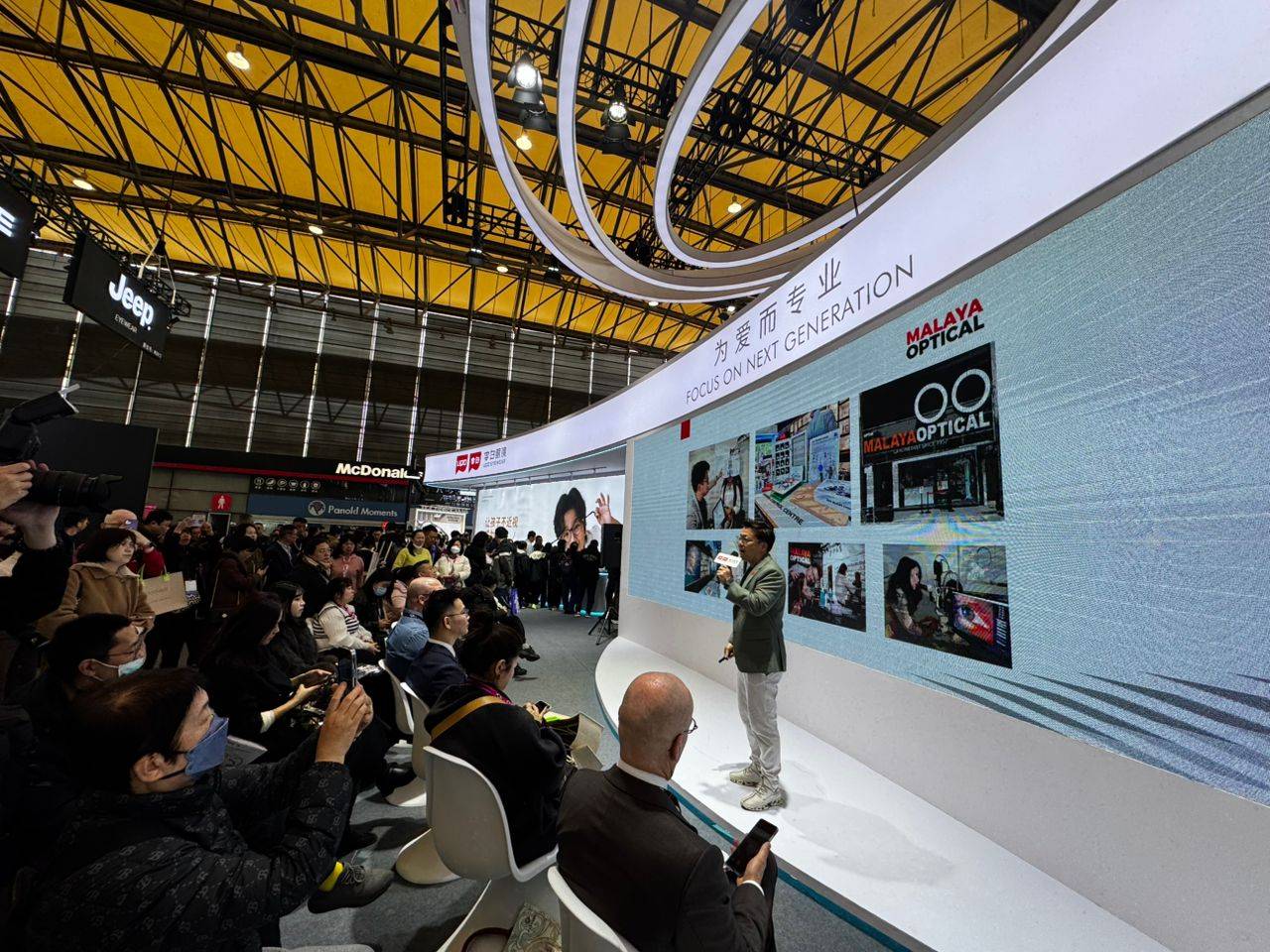
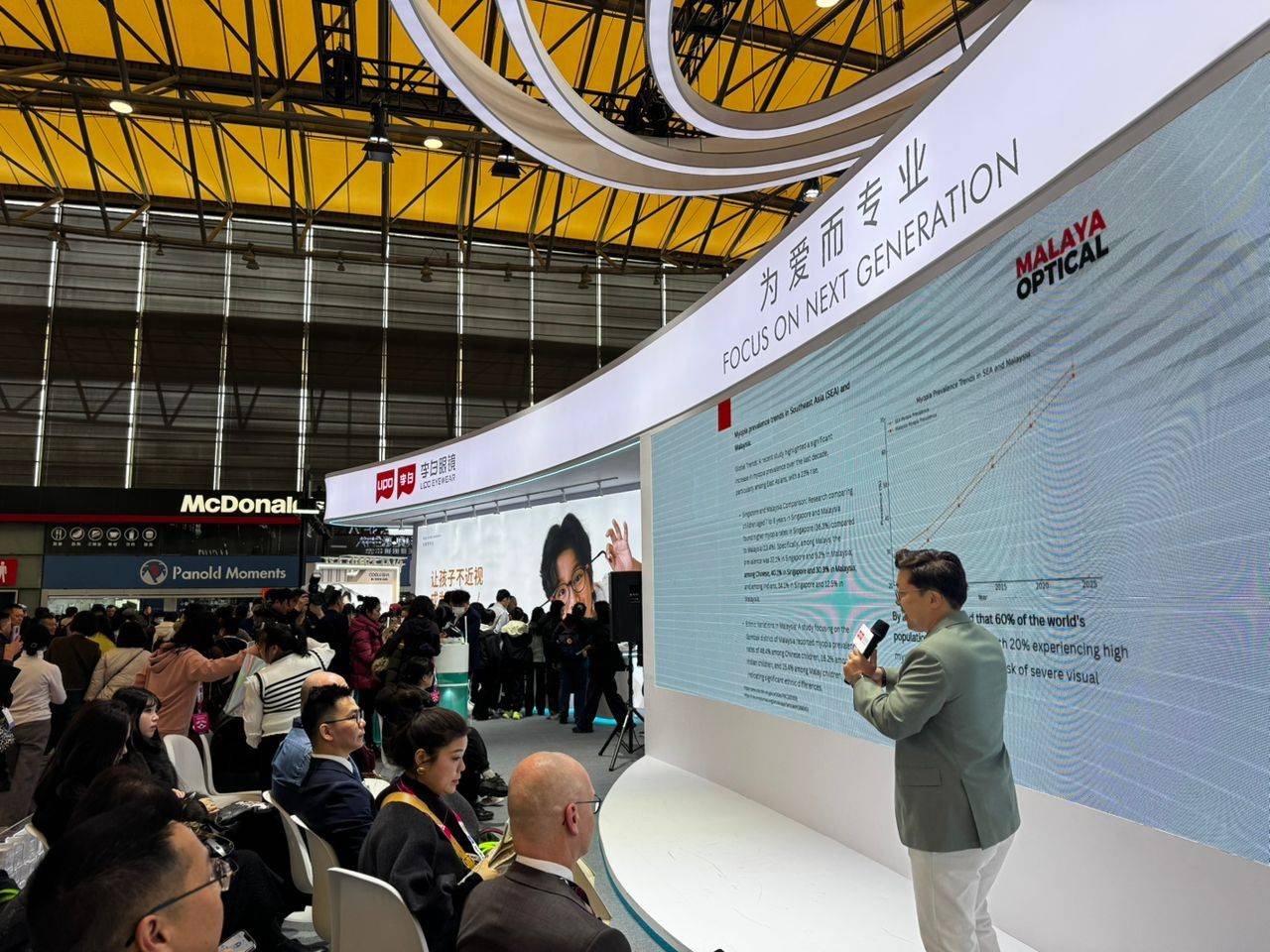
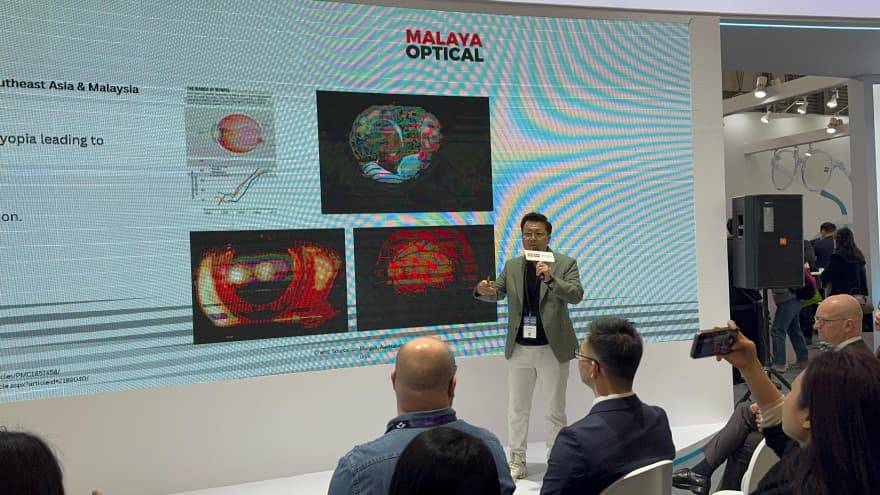
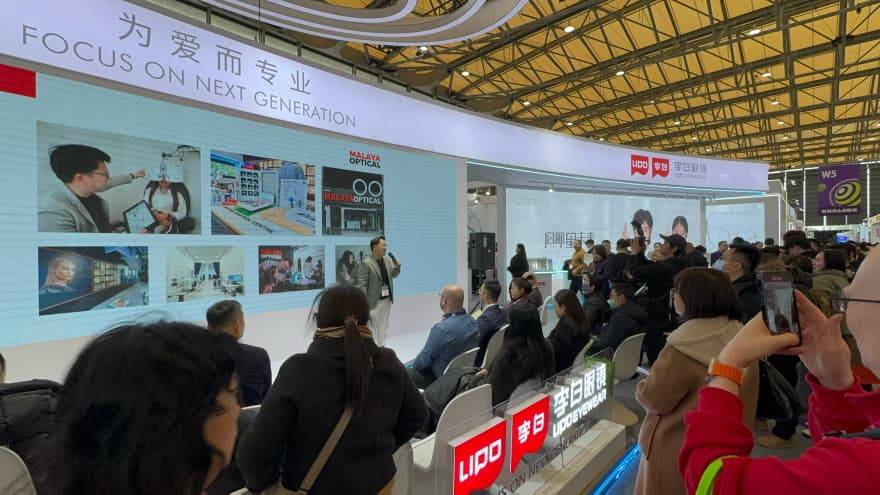
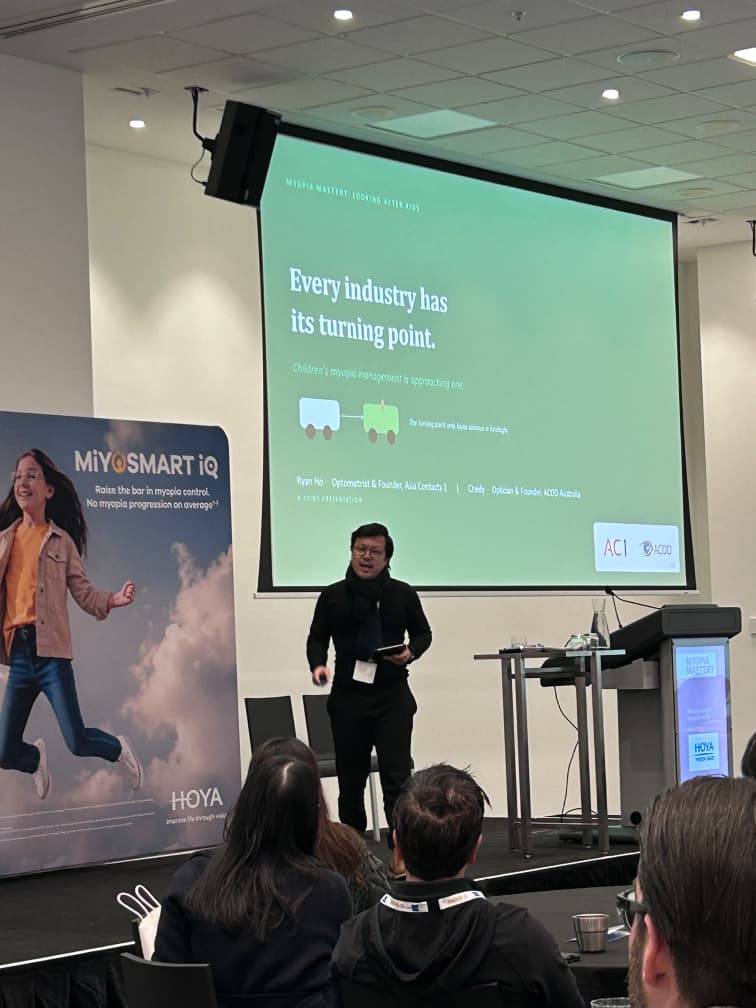
In February 2025, I had the privilege of presenting at the Shanghai International Optics Fair (SIOF) on a subject that has become an increasingly important part of my career as an optometrist: childhood myopia management.
Standing on the LIPO stage in Shanghai and sharing my experience from Malaysia was particularly meaningful to me.
For many years, I have been involved in myopia management through my own independent optometry practice, Malaya Optical in Malaysia. Today, through Asia Contacts 1, I also have the opportunity to look at the profession from another perspective — as a distributor working with independent eye care professionals across Australia and New Zealand.
These two roles have reinforced one very important belief:
When it comes to myopia management spectacles, the lens is only part of the solution.
How the frame fits the child matters too.
Myopia Management Doesn't End With the Prescription
We spend a great deal of time discussing myopia-control lens technology — and rightly so.
But as an optometrist, once I have selected an appropriate lens for a patient, another question becomes equally practical:
Where is that lens actually sitting in front of the child's eyes?
Children are not simply smaller adults.
Their facial structures vary enormously. Their bridges can be lower or narrower. Their ears sit differently. They are constantly moving, running, playing sport, looking down at schoolwork and using digital devices.
And, of course, they grow.
A frame that looks good when it is first placed on the face may not necessarily stay in the correct position throughout the day.
For conventional spectacles, a frame slipping down is inconvenient.
For a child wearing a sophisticated myopia-management lens, I believe we should expect more from the fitting.
The frame should allow the practitioner to achieve good positioning, stability and comfort — and help maintain that position during everyday wear.
Clinical literature on myopia-management spectacles similarly emphasises stable frames that do not slip and the value of adjustable nose pads and temples.
Fit Is Something I See Clinically Every Day
At Malaya Optical, we manage children with myopia from initial assessment through to ongoing reviews.
That experience has taught me that prescribing a good product is not enough.
We need children to actually wear their spectacles consistently, and we need parents to feel confident that the eyewear is comfortable, secure and suitable for everyday life.
A beautiful frame that repeatedly slides down a child's nose is not a good fitting outcome.
A frame that cannot be adequately adjusted for a child's bridge is not ideal simply because the eye size happens to be correct.
And when we are dispensing specialised myopia-control lenses, I believe our frame selection and fitting process should reflect the same level of attention we give to the lens itself.
That was one of the messages I wanted to share at SIOF.
Why LIPO Caught My Attention
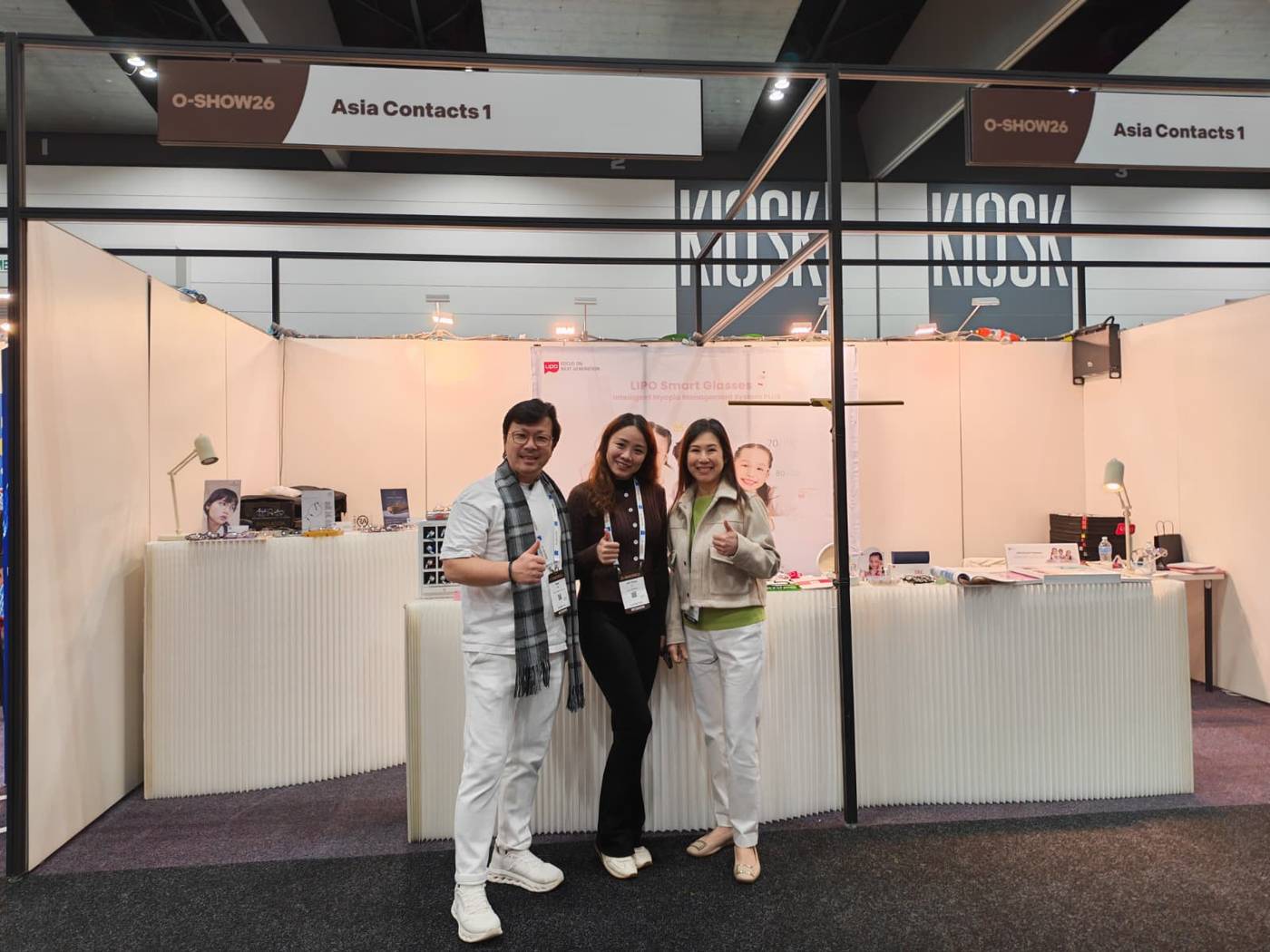
This is also one of the main reasons Asia Contacts 1 distributes LIPO throughout Australia and New Zealand.
I did not become interested in LIPO simply because it is another children's eyewear brand.
I was interested because many of its design features address problems that I recognise as an optometrist.
LIPO has developed a fitting system that gives the eye care professional considerably more flexibility when working with children's faces.
Depending on the model, this includes:
- adjustable temple lengths
- multiple nose-pad sizes
- S-shaped temple designs designed to improve stability and comfort
- lightweight, flexible construction
- frame shapes designed with myopia-management lenses in mind
- dedicated fitting grids and service tools to help practitioners assess lens and frame positioning.
The different nose-pad options are particularly useful. Rather than expecting one bridge design to fit every child, practitioners can choose between different sizes to achieve a more appropriate position.
Likewise, adjustable temples give the dispenser another way to control where the frame sits rather than simply accepting the manufacturer's original temple length.
LIPO's fitting approach and adjustable nose-pad and temple system have also been highlighted within the Australian optical industry as features intended to support stable positioning for myopia-management eyewear.
The Frame and Lens Need to Work Together
This is an important distinction.
At AC1, we don't see LIPO as a replacement for good clinical judgement, accurate measurements or professional dispensing.
It is a tool that gives the practitioner more options.
The optometrist or dispenser still needs to assess the child individually, select the appropriate frame and lens combination, take accurate measurements, make the necessary adjustments and review the fit over time.
But when the frame itself has been designed to provide greater fitting flexibility, it makes that job easier.
For me, this is how children's myopia eyewear should evolve.
We should stop thinking of the frame as simply the object that holds the lenses.
The frame, the lens, the fitting and the child's wearing behaviour all need to work together.
Children Grow — Their Eyewear Needs Follow-Up Too
Another point I strongly believe in is that fitting should not be treated as a one-time event.
Children grow.
Their facial structure changes. Their habits change. Frames are knocked, stretched and adjusted through normal childhood activity.
That is why follow-up is so important.
When a child returns for a myopia-management review, we should not only be asking how their prescription and axial length are progressing.
We can also look at the spectacles.
Are they still sitting correctly?
Has the frame started slipping?
Does the temple length need adjusting?
Does the bridge or nose pad need attention?
Is the child comfortable wearing them throughout the day?
LIPO's service and adjustment system was one of the features that appealed to me because it gives practices the ability to continue working with the fit after the original dispense, rather than regarding the frame as a finished product the moment it leaves the practice.
From Malaysia to Shanghai — and Now Australia and New Zealand
Presenting at SIOF 2025 gave me the opportunity to share some of what we have learned from managing myopia patients in Malaysia.
It also reminded me how quickly myopia management is developing internationally.
SIOF 2025 brought together major optical companies and practitioners with a significant focus on children's vision and myopia management. The event was held in Shanghai from 20–22 February 2025, with LIPO also hosting a dedicated programme around children's and adolescent myopia management.
Having travelled extensively to optical exhibitions around the world, I believe we are moving into a period where eye care professionals will expect more from every component of a myopia-management solution.
Not only better lenses.
Better measurements.
Better monitoring.
Better education.
And better fitting eyewear.
Why We Bring LIPO to Independent Practices
Asia Contacts 1 represents LIPO in Australia and New Zealand because I believe it provides independent eye care professionals with something genuinely useful in this area.
Our role is not simply to supply frames.
I want AC1 to help practices develop stronger myopia-management offerings by bringing them products that make sense clinically as well as commercially.
LIPO is one of those products.
It gives practitioners a children's eyewear system designed around adjustability, stability, comfort and professional fitting — qualities that become particularly relevant when sophisticated myopia-management lenses are being prescribed.
And as an optometrist myself, that is important to me.
Because ultimately, whether I am standing on a stage at SIOF, seeing a child at Malaya Optical, or talking with an independent optometrist in Melbourne, Sydney, Auckland or Christchurch, the objective is the same:
to give every child the best opportunity to see well today while protecting their vision for the future.
That starts with good clinical care.
And sometimes, something as seemingly simple as getting the frame fit right can make a very important difference.